
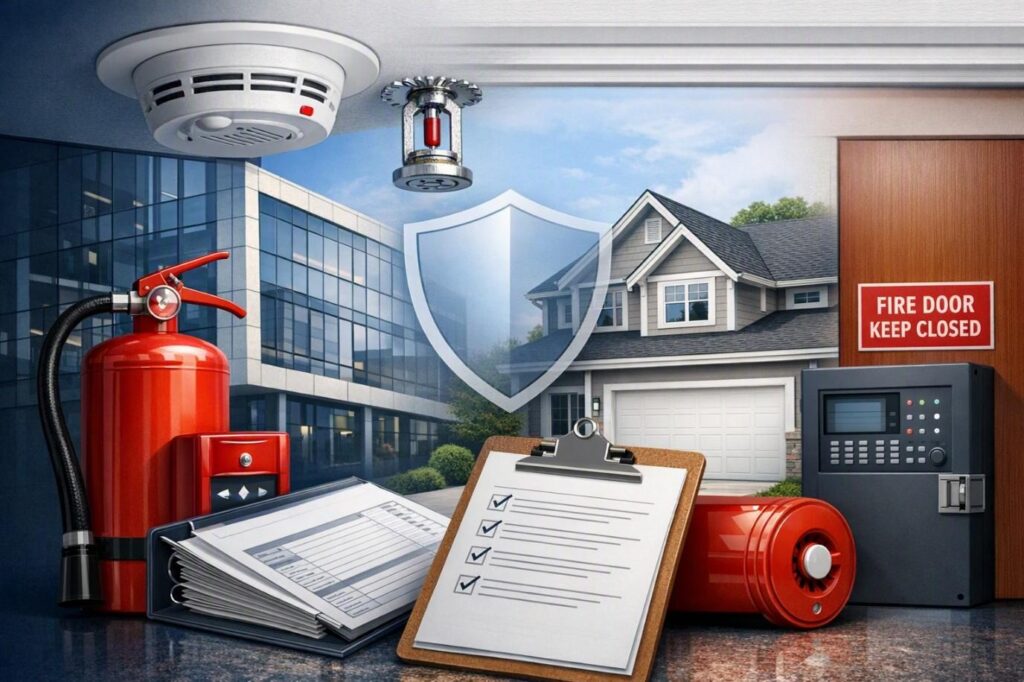
Fire risk remains one of the most significant threats to both personal assets and business operations in South Africa. While many clients rely on short-term insurance to protect against potential losses, compliance with fire safety regulations plays a crucial role in whether claims are paid, and how severe losses may be.
Recent guidance on South African fire compliance highlights that proactive risk management is just as important as insurance cover itself.
The Regulatory Landscape: What You Need to Know
Fire safety compliance in South Africa is governed by a combination of legislation and technical standards, including:
- The National Building Regulations and Building Standards Act (Act 103 of 1977)
- The Occupational Health and Safety Act (1993)
- Municipal fire by-laws
- SANS (South African National Standards) codes for fire protection systems
These frameworks set out the minimum requirements for how properties must be designed, equipped, and maintained to mitigate fire risk.
For property owners and business operators, compliance is not optional, it is a legal obligation.
Fire Protection: More Than Just Fire Extinguishers
Effective fire risk management requires a combination of active and passive protection systems, both of which are often considered during underwriting and claims assessment.
Active Fire Protection
These systems detect or combat fires and typically require activation:
- Fire alarms and detection systems
- Sprinklers and water risers
- Fire extinguishers
- Emergency communication systems
Passive Fire Protection
These are built into the structure to limit fire spread:
- Fire-resistant walls and materials
- Fire doors
- Smoke and fire dampers
Both types of systems are essential to achieving compliance and reducing potential loss severity.
Why This Matters for Your Insurance Cover
From a short-term insurance perspective, fire safety compliance directly influences:
Risk Assessment and Premiums
Insurers evaluate the presence and condition of fire protection systems when determining risk profiles and premiums.
Claims Outcomes
Failure to comply with regulations or maintain fire systems may:
- Lead to reduced claim settlements, or
- In severe cases, result in claim repudiation, particularly where negligence is established
Business Interruption Risk
For businesses, inadequate fire protection can result in:
- Extended downtime
- Loss of revenue
- Reputational damage
In short, insurance is designed to respond to unforeseen events, not to compensate for preventable risk exposure.
Common Compliance Gaps
Many losses occur not because of the absence of insurance, but due to gaps in risk management, including:
- Failure to conduct regular inspections
- Poor maintenance of fire equipment
- Outdated or non-compliant systems
These oversights can expose both individuals and businesses to significant financial and legal consequences.
The Importance of Ongoing Maintenance
Fire safety compliance is not a once-off exercise, it requires continuous monitoring and maintenance.
Essential measures include:
- Routine inspection of fire extinguishers and alarm systems
- Hydrant flow and pressure testing
- Regular servicing of sprinkler systems
- Periodic fire risk assessments
These checks ensure that systems function correctly when needed and help maintain compliance with relevant standards.
Practical Considerations for Clients
Whether you are a homeowner, landlord, or business owner, consider the following:
- Ensure your property meets current fire safety standards
- Keep all fire protection equipment serviced and certified
- Maintain records of inspections and compliance
- Review your insurance policy to understand compliance-related conditions
- Engage professionals for regular risk assessments
Key Takeaway
Fire safety compliance is a fundamental part of risk management, not just a regulatory requirement.
For both personal and commercial clients, the combination of adequate insurance cover and proactive fire prevention is essential to protecting assets, ensuring business continuity, and avoiding uninsured losses.
Final Thought
In today’s risk environment, the question is no longer whether you are insured, but whether you are adequately prepared.
Ensuring compliance today could be the difference between a fully settled claim and a significant financial setback tomorrow.
Source
Adapted from:
East Rand Fire – Fire Safety Compliance and Regulations in South Africa: Detailed Guide (2025) [inboundsa.com]